


Addressing Sciatic Pain: Start Early for Best Results
Lower back pain is bad enough. Now imagine that pain radiating down through your buttocks and into your leg. Maybe your leg becomes numb. Maybe the pain is so bad that you can barely walk!
For people with sciatica, this nightmare scenario is a reality. Sciatica is a type of lumbar radiculopathy (i.e., nerve pain) resulting from damage or irritation to the sciatic nerve, which runs from your lower back down the back of your leg. It affects between 1% – 5% of the population.
Sciatica can be debilitating. In addition to intense pain, it severely limits your mobility — some people may struggle to get around at all. And because it results from nerve damage, it can also cause numbness, tingling, and other sensations in the leg.
The good news is that physical therapy at Haymarket Physical Therapy is one of the best treatment options for addressing sciatic pain. Unlike pain medication, it doesn’t simply mask the symptoms — it seeks to resolve the underlying cause of your sciatic pain so that you have lasting relief.
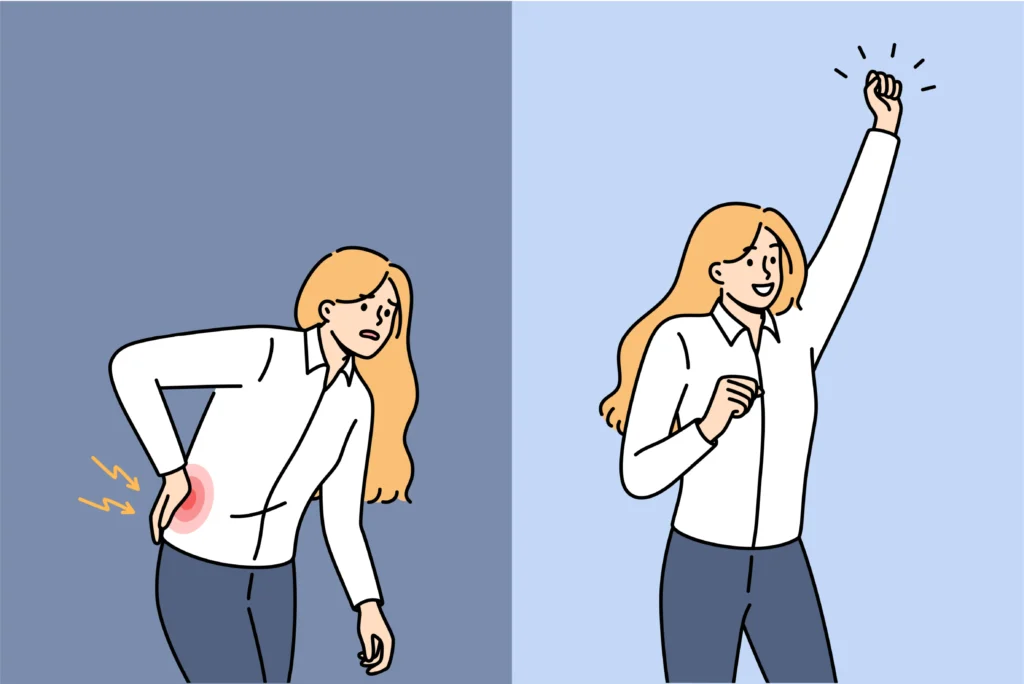
Are you ready to say goodbye to sciatic pain for good? Call us to set up your initial evaluation today — and let us get to the root of your sciatica!
When Should I See a Physical Therapist About Sciatica?
As with most musculoskeletal pains, sooner is better! Many people try to ride out sciatic pain by taking pain medication and resting — which can actually be counterproductive and further worsen the underlying cause of your sciatica. By seeking out an early intervention, you can start feeling better faster.
You should also pay attention to changes in the severity of your pain or shifting sensations in your back and leg. Because sciatica is caused by pressure on the sciatic nerve, these changing symptoms can indicate something is happening to the nerve.
What are some of the specific symptoms of sciatica you should watch out for?
- Pain in the lower back, buttocks, and leg. (Sciatica usually only affects one leg at a time.) This pain might be dull, throbbing, aching, shooting, sharp, etc. Remember to pay attention to changes in sensation!
- Numbness or tingling in the back, buttocks, or leg
- Restricted range of motion in the back. You might struggle to twist, bend, or stand up straight.
- Walking with a limp
- Increased pain in the morning or after remaining in one position for an extended period
One symptom you absolutely shouldn’t ignore is any kind of incontinence when paired with sciatic pain. This indicates a serious medical emergency that may require surgical intervention — but our physical therapists will be here waiting to help you with rehabilitation!
Fortunately, such incidents are rare. In most cases, regular physical therapy is enough to resolve sciatic pain.

Physical Therapy: Frontline Treatment for Sciatica
One of the reasons physical therapy is so effective for sciatic pain is that it focuses on resolving the underlying cause. When you come in for your appointment, our therapists will perform a comprehensive evaluation to help us determine what might be irritating, pinching, or compressing your sciatica nerve.
We’ll ask you to share details about your symptoms, such as when they started and the exact sensations you’re experiencing (i.e., dull pain, shooting pain, numbness). We’ll also perform several movement screens that give us a complete picture of your situation. We might check the following:
- Overall mobility
- Muscle weakness and activity
- Nerve activity
- Posture
- Balance and gait
Once we understand what’s causing your sciatic pain, we’ll develop a customized treatment plan to address that cause. The most common cause of sciatica is a lumbar herniated disc.
Nestled between each vertebra in your spine is a vertebral disc, a soft cushion of cartilage that protects the vertebrae from rubbing against each other. If one of those discs becomes damaged — either because of a sudden injury or age-related degeneration — they can rupture or bulge, irritating the nearby sciatic nerve.
By addressing your herniated disc, you can resolve your sciatica. For most people, that means a targeted, progressive therapeutic exercise program paired with pain management techniques such as manual therapy.
July 4th Celebrations: Prioritize Health and Safety
July brings 4th of July celebrations, and while enjoying fireworks and picnics, it’s essential to prioritize safety. Here are some expert tips from Haymarket:
- Stay Hydrated: With the summer heat, dehydration is a concern. Bring plenty of water to stay hydrated during outdoor activities.
- Firework Safety: If you plan to handle fireworks, follow safety guidelines strictly. Mishandling can lead to burns and accidents.
- Healthy Picnic Choices: Choose nutritious picnic options like salads, grilled veggies, and lean proteins. Limit sugary drinks and snacks that can lead to energy crashes.
- Mind Your Posture: Whether watching fireworks or dining at a picnic, maintain good posture to prevent back and neck strain. Sit upright and use cushions for support if needed.
By focusing on safety and making healthy choices, you can have a memorable and healthy 4th of July celebration!
Don’t Let That Sciatic Pain Linger: Make Your Appointment Today!
Sciatica can dramatically impact your overall quality of life. Early intervention with Haymarket will ensure you say goodbye to sciatic pain for good. If you’re experiencing any possible sciatica symptoms, call today to make your appointment!
Exercise of the Month:
DOUBLE KNEES TO CHEST
Lie on your back with knees bent. Bring both knees toward your chest, holding them gently with your hands. Hold the stretch for a few seconds, then release to improve lower back flexibility.
Meet Our Team

Lauren Smith, LPTA
Licensed Physical Therapy Assistant

Dr. Catalina Lemcke, PT, DPT
DPT, Director of Rehabilitation

Porter Wilson
Rehabilitation Aide

Preventing Sprains, Strains, & RSIs
Nobody enjoys the limitations and discomfort of sprains, strains, and repetitive stress injuries (RSIs), so it’s great news that many of these conditions can be prevented with some proactive measures. Incorporating simple strategies into your daily routine and being mindful of your body’s signals can significantly reduce your risk of experiencing these painful setbacks.
- Warm-up and Cool-down: A proper warm-up can increase blood flow to your muscles, improve mobility, and reduce the risk of injury. Similarly, a cool-down helps your body gradually return to its resting state, which can help prevent muscle soreness and stiffness.
- Listen to Your Body: Pain is your body’s way of signaling that something is wrong. Don’t ignore those aches and pains – they may be early warning signs of an impending injury. If you experience discomfort during or after an activity, stop and contact us for an appointment. Pushing through pain can exacerbate the problem and lead to more serious complications.
- Mobility and Strength: Maintaining good muscle strength and range of motion can help protect your joints and reduce your risk of injury. Our PT programs will show you how to incorporate regular exercise into your routine that strengthens the muscles surrounding your joints and improves your overall range of motion.
- Footwear and Protective Gear: Wearing appropriate footwear and protective gear can also help prevent injuries. Choose shoes that are meant for the activity you’re doing and fit properly. If you’re participating in activities that put you at risk for falls or impacts, wear protective gear such as helmets, knee pads, or wrist guards.
Contact us today for a personalized program with proactive steps to avoid sprains, strains, and RSIs. And if you do experience an injury, don’t wait to schedule your PT appointment with Haymarket. We’ll help you get back to your activities stronger than before.
How EMG/NCS Testing Can Help Identify The Source of Sciatic Pain

If you’re struggling with sciatica, you want relief fast. But until you know what’s irritating your sciatic nerve, you’ll never be able to resolve your pain entirely.
In most cases, a herniated disc is the culprit for sciatica. Still, it’s important to be sure, as the underlying cause of your pain will dictate the treatment approach our physical therapists recommend. Diagnostic tools such as EMG/NCS testing will help your physical therapist know for certain.
EMG/NCS Testing: A Quick Overview
An EMG (electromyography) is a simple procedure that measures the electrical activity of your muscles. One of our diagnostic specialists will insert a needle electrode into your muscle. They’ll ask you to contract and relax the muscle as the EMG records the results.
We usually perform an EMG test alongside an NCS (nerve conduction study), which measures the speed of electrical activity along your nerves. An NCS uses electrodes that are attached to the skin. Our specialist will send a small electrical pulse between the electrodes to collect the necessary information.
Together, these two studies can confirm that your sciatica is, in fact, courtesy of a herniated disc–allowing the Haymarket physical therapists to get started on an appropriate treatment program.
Schedule Your EMG/NCS Test Today!
A simple test might be all you need to get to the root of your sciatica pain. To get started, call us to schedule your testing appointment today!
Recipe of the Month: Rosemary Citrus One Pan Baked Salmon

Ingredients:
- ⅓ cup olive oil
- 1 small orange (2 Tablespoons juice of orange plus thinly sliced orange slices)
- 1 Tablespoon lemon juice
- ½ teaspoon garlic, minced
- ¼ teaspoon orange zest (grated orange peel from orange)
- 2 Tablespoons fresh rosemary, plus extra to garnish (1 tsp dried rosemary may be substituted)
- 2 –3 teaspoons honey
- 10–12 ounces sockeye salmon (whole fillet or three 4 ounces fillets)
- Pinch of sea salt
- Optional – thinly sliced orange or lemon
- Optional- 2 cups chopped/sliced veggies of choice (i.e broccoli, asparagus, green beans, etc.)
- Additional seasoning of choice or salt and pepper to taste
Instructions:
- Whisk together the olive oil, orange juice, lemon juice, garlic, orange zest, 2 tablespoons rosemary, and optional honey. Set the mixture aside.
- Grease or oil a large baking dish. Place the salmon in the baking dish, skin side down. Season the salmon with a pinch of salt.
- Preheat the oven to 400 degrees Fahrenheit.
- Brush the orange rosemary on top of the salmon, and place the salmon in the fridge to marinate for 5-10 minutes while the oven preheats.
- After 5-10 minutes, add thin orange slices on top of the salmon (optional), and toss veggies of choice with the reserved marinade or 2 teaspoons of olive oil, lemon juice, or seasoning of choice.
- Place the tossed veggies (if using) around the salmon in the pan.
- Place the baking dish in the oven for 12-15 minutes or until the salmon is no longer opaque in the middle and the vegetables are cooked through.
- Let the salmon rest for 3 minutes before serving.
- Add additional salt and pepper to taste.
Sources
- https://www.cottercrunch.com/rosemary-citrus-one-pan-baked-salmon/#tasty-recipes-43144
- https://www.ncbi.nlm.nih.gov/books/NBK507908/
- https://www.apta.org/article/2020/10/08/sciatica-study
- https://www.physio-pedia.com/Sciatica
- https://medlineplus.gov/lab-tests/electromyography-emg-and-nerve-conduction-studies/